Are You Stressed About Being Stressed?
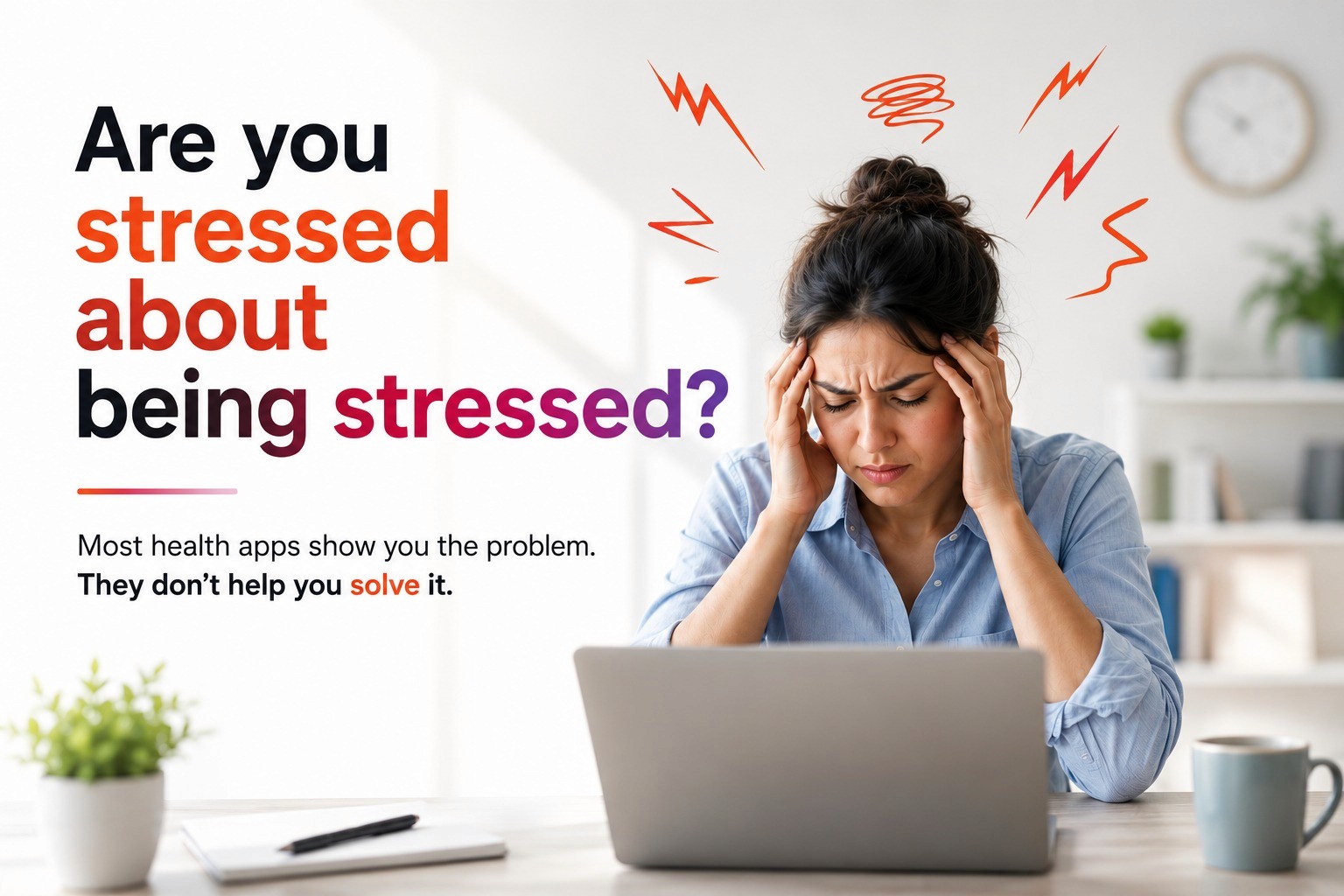
Are you stressed about being stressed?
"My smartwatch tells me every single morning that my recovery is at 12%, like I have a choice to just stay in bed."
This is what Neha, a 35 year old SAAS Tech Founder from Gurgaon had to say about the current digital wellbeing apps.
Most digital health tools on the market operate on a deeply broken assumption: they assume that if they give you enough charts, you’ll magically find the time and energy to fix your burnout yourself.
They hand you stress scores, heart-rate variability graphs, and sleep readouts every morning. It is the digital equivalent of handing a driver a smoking engine on the highway and saying, "Your car is overheating, figure it out."
Then they send a push notification and walk away.
This is the typical data dump trap. Data without immediate, zero-effort action just creates an anxiety loop.
When you wake up to a smartwatch telling you your "recovery score is 14%," it doesn't give you extra hours in the day. It doesn't cancel your 9:00 AM pitch, lighten your calendar, or fix a product crisis.
Instead, raw tracking creates a brand-new form of mental strain. Now you are not only running on fumes—you are actively stressed about how stressed you are. You carry the subtle guilt of knowing your body is overwhelmed while feeling completely unable to stop the machine.
When you are running a business, managing a team, or switching between twelve high-stakes decisions an hour, you don't need a prettier dashboard. You already know you are exhausted. What you actually need is a tool that fixes the problem in real time, without demanding extra time or energy from your day.
What is the Next Step?
When your health trackers do nothing but quantify your exhaustion, buying another wearable or downloading an app that demands a lifestyle overhaul isn't the answer.
The next step is shifting from reactive monitoring to autonomous, background support. You don't need another device measuring your crash; you need an intelligent infrastructure layer sitting quietly inside your existing workflow. One that tracks your cognitive load through real-time signals—like calendar pressure, vocal strain, and sleep debt—and automatically executes recovery without requiring your time, attention, or a single forced break.
Moving From Dashboards to Real Action
Recovery shouldn't require you to pause your life or change your daily routines. Real recovery on a packed schedule has to happen while you work.
Instead of dumping charts onto your screen, the solution need to work quietly in the background:
This is exactly how NextYou: Burnout Recovery AI works.
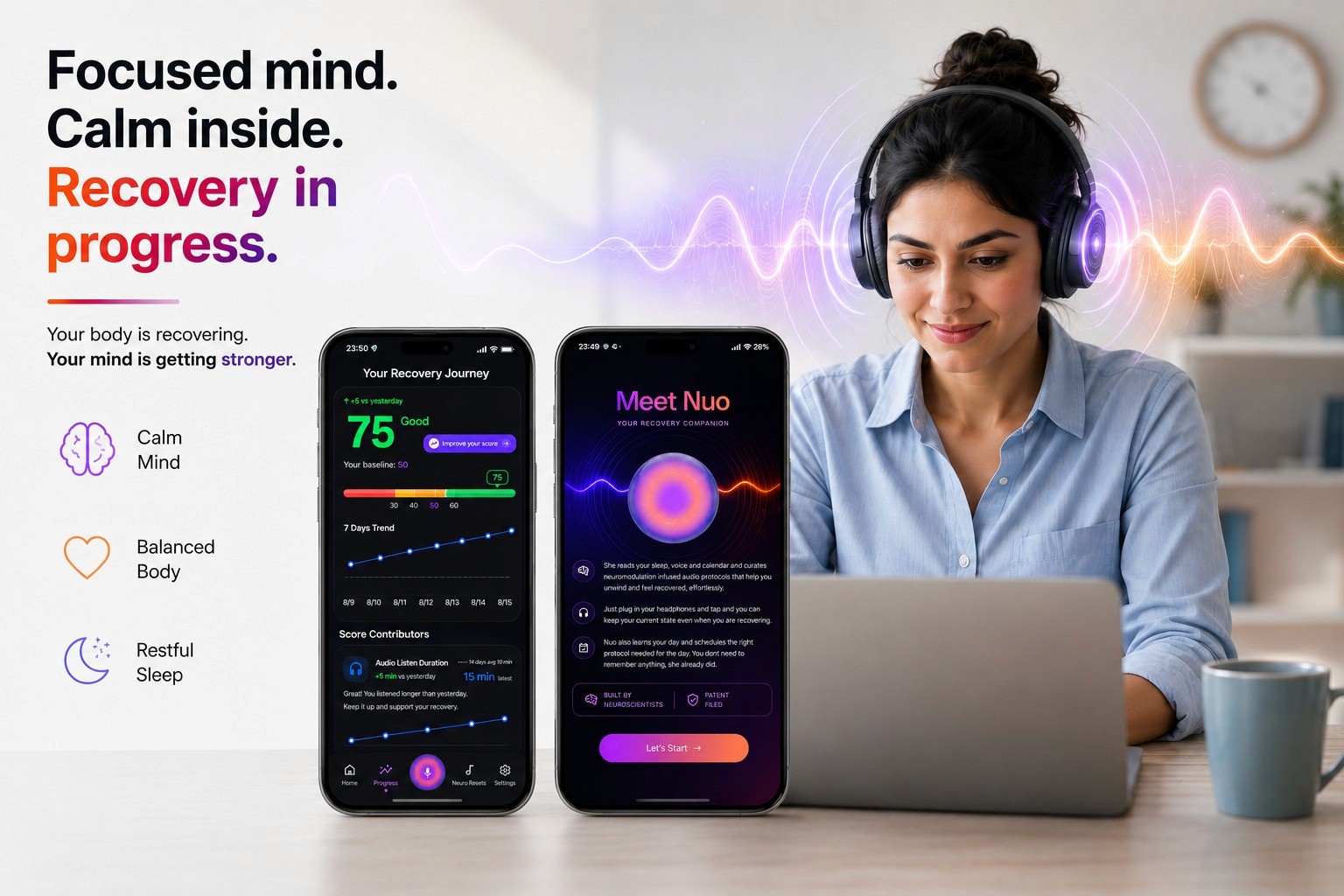
This App detects your voice, sleep, calendar and heart rate and curates highly personalised and automated neuromodulation resets which help to recover even when you are working.
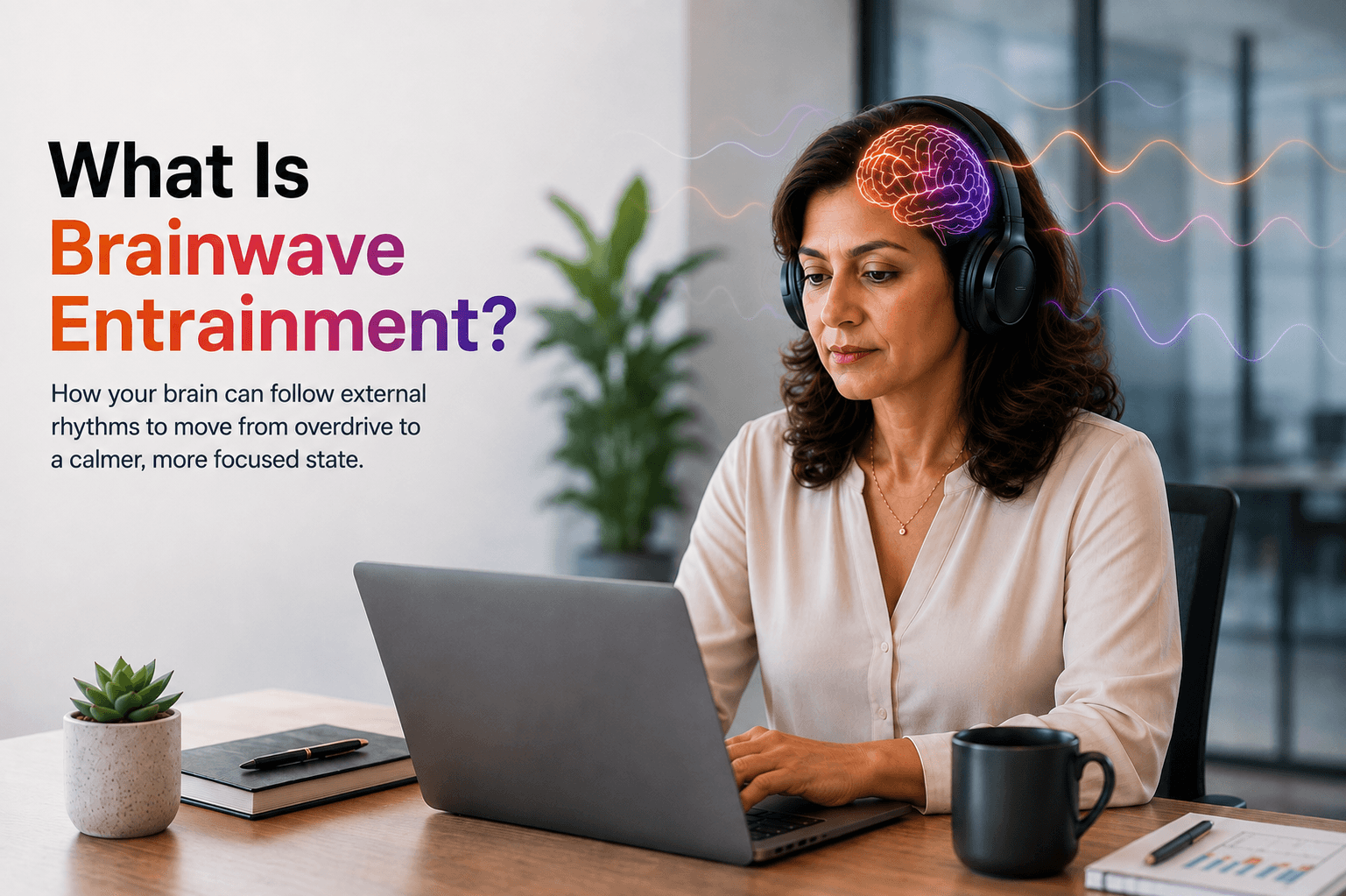
When you redline, it plays targeted sound frequencies straight through your headphones to bring your focus back online.
We built an automatic support system for your nervous system—one that senses when you are redlining and restores your mental clarity without forcing you to log off, step away, or change your habits.
Everyone else is building AI agents to handle your emails. We built Nextyou to take care of your recovery while at work.
No charts to analyze. No habit changes. You just put your headphones on and keep running your business.
The Boundary That Matters
Let's be direct: this approach is not therapy, nor is it a substitute for professional medical care.
Nextyou exists specifically to fill the gap on high-intensity days when taking time off or stepping back simply isn't an option—helping you keep your mind clear, avoid brain fog, and recover in real time without missing a beat.
The app is available in Play Store: https://play.google.com/store/apps/details?id=app.nextyou.android&hl=en_IN
Are you stressed about being stressed?
"My smartwatch tells me every single morning that my recovery is at 12%, like I have a choice to just stay in bed."
This is what Neha, a 35 year old SAAS Tech Founder from Gurgaon had to say about the current digital wellbeing apps.
Most digital health tools on the market operate on a deeply broken assumption: they assume that if they give you enough charts, you’ll magically find the time and energy to fix your burnout yourself.
They hand you stress scores, heart-rate variability graphs, and sleep readouts every morning. It is the digital equivalent of handing a driver a smoking engine on the highway and saying, "Your car is overheating, figure it out."
Then they send a push notification and walk away.
This is the typical data dump trap. Data without immediate, zero-effort action just creates an anxiety loop.
When you wake up to a smartwatch telling you your "recovery score is 14%," it doesn't give you extra hours in the day. It doesn't cancel your 9:00 AM pitch, lighten your calendar, or fix a product crisis.
Instead, raw tracking creates a brand-new form of mental strain. Now you are not only running on fumes—you are actively stressed about how stressed you are. You carry the subtle guilt of knowing your body is overwhelmed while feeling completely unable to stop the machine.
When you are running a business, managing a team, or switching between twelve high-stakes decisions an hour, you don't need a prettier dashboard. You already know you are exhausted. What you actually need is a tool that fixes the problem in real time, without demanding extra time or energy from your day.
What is the Next Step?
When your health trackers do nothing but quantify your exhaustion, buying another wearable or downloading an app that demands a lifestyle overhaul isn't the answer.
The next step is shifting from reactive monitoring to autonomous, background support. You don't need another device measuring your crash; you need an intelligent infrastructure layer sitting quietly inside your existing workflow. One that tracks your cognitive load through real-time signals—like calendar pressure, vocal strain, and sleep debt—and automatically executes recovery without requiring your time, attention, or a single forced break.
Moving From Dashboards to Real Action
Recovery shouldn't require you to pause your life or change your daily routines. Real recovery on a packed schedule has to happen while you work.
Instead of dumping charts onto your screen, the solution need to work quietly in the background:
This is exactly how NextYou: Burnout Recovery AI works.
This App detects your voice, sleep, calendar and heart rate and curates highly personalised and automated neuromodulation resets which help to recover even when you are working.
When you redline, it plays targeted sound frequencies straight through your headphones to bring your focus back online.
We built an automatic support system for your nervous system—one that senses when you are redlining and restores your mental clarity without forcing you to log off, step away, or change your habits.
Everyone else is building AI agents to handle your emails. We built Nextyou to take care of your recovery while at work.
No charts to analyze. No habit changes. You just put your headphones on and keep running your business.
The Boundary That Matters
Let's be direct: this approach is not therapy, nor is it a substitute for professional medical care.
Nextyou exists specifically to fill the gap on high-intensity days when taking time off or stepping back simply isn't an option—helping you keep your mind clear, avoid brain fog, and recover in real time without missing a beat.
The app is available in Play Store: https://play.google.com/store/apps/details?id=app.nextyou.android&hl=en_IN