How Sound Tunes Your Brain for Peak Performance

High-output work puts the central nervous system under prolonged stress. When stress continues for too long, higher levels of stress hormones like cortisol can affect decision-making, working memory, focus, and overall mental energy.
While traditional relaxation methods require stepping away from active tasks, using neuromodulated audio during work hours offers a simple way to support the nervous system without interrupting your workflow.
How Sound Impacts the Brain and Central Nervous System
Sound is not just something we hear. It can influence how the brain responds to emotions, stress, and attention.
How Sound Affects the Brain:
Sound signals are processed by areas of the brain involved in emotion and memory. This allows certain types of sound to influence how we feel and how our body responds to stress (Frontiers in Psychology, 2017).Reducing the Effects of Stress:
Research has found that certain types of structured audio can reduce cortisol levels and other physical signs of stress (Endocrine Regulations, 2018).Supporting a Calmer State:
Certain types of sound may help the body move from a highly alert state toward a calmer one. This can be reflected in changes in heart rate and Heart Rate Variability (HRV) (Journal of Physiological Anthropology, 2016).
Frequency Targeting and Brain Activity
The brain is constantly producing electrical activity at different speeds, measured in Hertz (Hz). These patterns are commonly grouped into different frequency ranges.
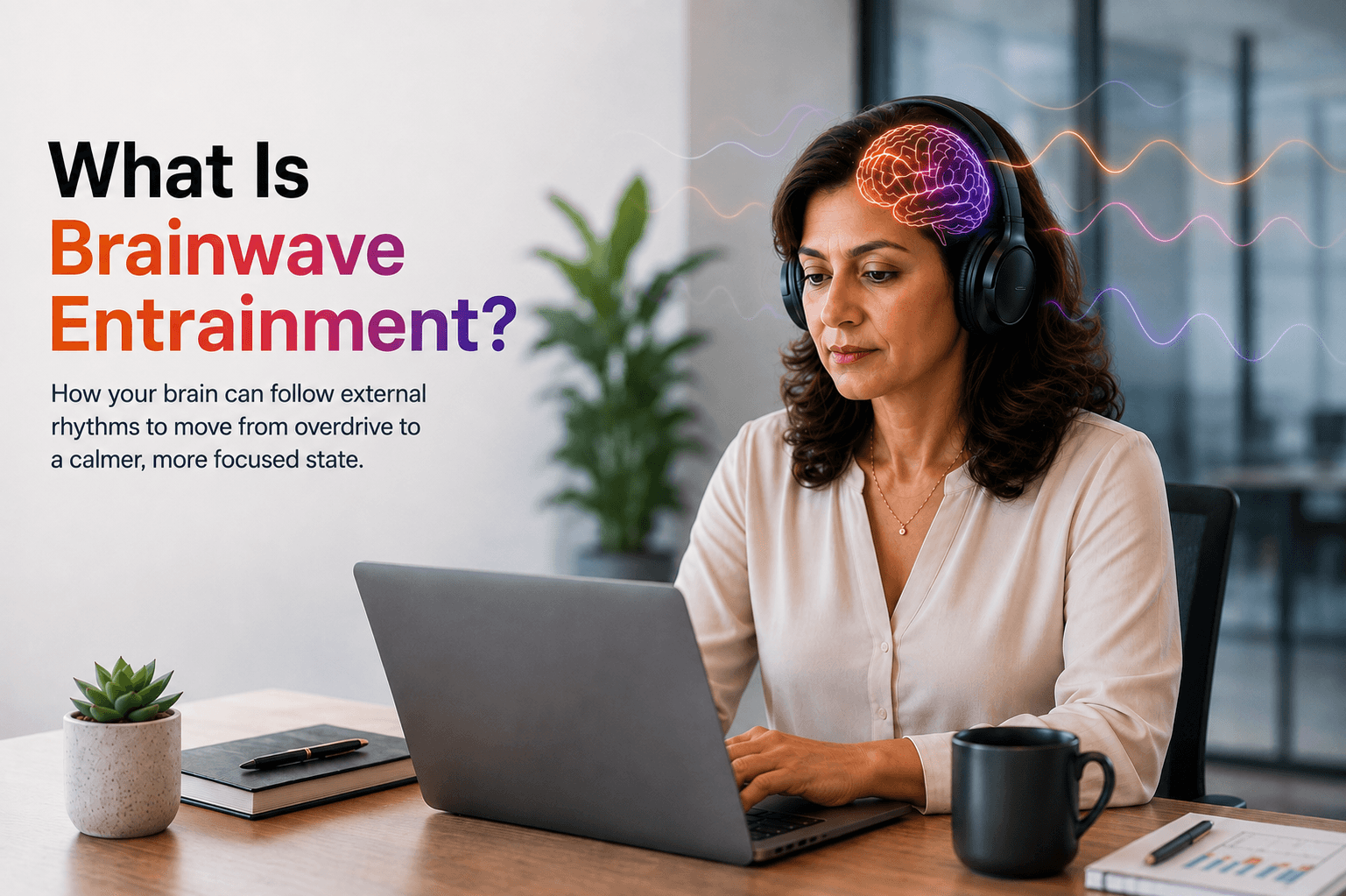
Certain types of audio can be designed around these ranges to encourage different mental states through brainwave entrainment—the process where brain activity may become influenced by the rhythm of an external sound.
Delta (0.5–4 Hz): Associated with deep sleep and physical recovery.
Theta (4–8 Hz): Associated with deep relaxation, emotional processing, and creative thinking.
Alpha (8–12 Hz): Associated with calm alertness and relaxed focus.
Beta (13–30 Hz): Associated with active thinking, problem-solving, and concentration; prolonged periods of intense focus can contribute to mental fatigue.
One approach is binaural beats—where two slightly different frequencies are played into each ear. The brain perceives the difference between the two sounds as a rhythmic pulse, which may influence brain activity toward a particular range.
Why Working Professionals Are Turning to Work-Hour Neuromodulation
Modern knowledge workers face high mental demands alongside constant digital distractions. The shift toward using structured audio during active work hours comes down to three main factors:
Zero-Time Recovery: It allows people to support a calmer state while actively typing, coding, or reading, without needing to stop working.
Environmental Control: It creates a stable, predictable audio environment that can help reduce the impact of distracting open-office or remote environments.
Cognitive Stamina: Reducing prolonged stress during the workday may help preserve focus and decision-making ability for later tasks.
Distinction in Audio Types: Instrumental vs. Non-Instrumental
Choosing the right type of audio is important when you are working for long periods.
Non-Instrumental / Lyrical Audio:
The Cognitive Friction: Music with vocals requires the brain to process language while you are working.
The Impact: When reading, writing, or analyzing data, lyrics can compete for your attention. Your brain has to process the words while also focusing on the task, which can increase mental effort.
Instrumental Neuromodulated Audio:
The Cognitive Benefit: Instrumental soundscapes combined with carefully designed sound patterns contain no lyrics or spoken information.
The Impact: They can provide background sound without competing for your attention, making them better suited for sustained focus on complex tasks.
Work-Hour Audio Types for Stress Relief and Performance
Different audio formats can serve different purposes throughout the workday:
Audio Format | Mechanism | Primary Work-Hour Application |
Binaural Beats (Alpha 10 Hz) | Uses two slightly different frequencies to create a rhythmic pulse | Sustained strategic focus and deep writing blocks. |
Pink / Brown Noise | Provides consistent background sound across lower frequencies | Masking unpredictable background noise and reducing distractions. |
Slow-Tempo Instrumental (60 BPM) | Uses a slower, steady rhythm | Transitioning out of high-pressure periods and supporting a calmer state. |
Automating Work-Hour Neuromodulation with NextYou
Manually selecting audio tracks, timing recovery sessions, and switching between different types of audio across a demanding workday creates unnecessary effort.
NextYou: Burnout Recovery AI removes this operational barrier by turning sound-based support into a zero-touch background layer powered by its AI agent, Nuo:
Zero-Touch Execution: Download the application, put on standard headphones, and work as usual. The platform operates in the background without requiring manual playlist management.
Biometric & Contextual Sensing: Using privacy-first acoustic voice analysis (Sound Check) and real-time calendar load tracking, NextYou looks for signs of increased stress and changes in your workload before you consciously feel the effects.
Automated Audio Tuning: Nuo automatically streams targeted neuromodulated audio and binaural beats directly to your headphones—supporting focus before critical calls, helping you reset after demanding meetings, and guiding recovery after hours of work.
Download the app now: https://play.google.com/store/apps/details?id=app.nextyou.android&hl=en_IN
High-output work puts the central nervous system under prolonged stress. When stress continues for too long, higher levels of stress hormones like cortisol can affect decision-making, working memory, focus, and overall mental energy.
While traditional relaxation methods require stepping away from active tasks, using neuromodulated audio during work hours offers a simple way to support the nervous system without interrupting your workflow.
How Sound Impacts the Brain and Central Nervous System
Sound is not just something we hear. It can influence how the brain responds to emotions, stress, and attention.
How Sound Affects the Brain:
Sound signals are processed by areas of the brain involved in emotion and memory. This allows certain types of sound to influence how we feel and how our body responds to stress (Frontiers in Psychology, 2017).Reducing the Effects of Stress:
Research has found that certain types of structured audio can reduce cortisol levels and other physical signs of stress (Endocrine Regulations, 2018).Supporting a Calmer State:
Certain types of sound may help the body move from a highly alert state toward a calmer one. This can be reflected in changes in heart rate and Heart Rate Variability (HRV) (Journal of Physiological Anthropology, 2016).
Frequency Targeting and Brain Activity
The brain is constantly producing electrical activity at different speeds, measured in Hertz (Hz). These patterns are commonly grouped into different frequency ranges.
Certain types of audio can be designed around these ranges to encourage different mental states through brainwave entrainment—the process where brain activity may become influenced by the rhythm of an external sound.
Delta (0.5–4 Hz): Associated with deep sleep and physical recovery.
Theta (4–8 Hz): Associated with deep relaxation, emotional processing, and creative thinking.
Alpha (8–12 Hz): Associated with calm alertness and relaxed focus.
Beta (13–30 Hz): Associated with active thinking, problem-solving, and concentration; prolonged periods of intense focus can contribute to mental fatigue.
One approach is binaural beats—where two slightly different frequencies are played into each ear. The brain perceives the difference between the two sounds as a rhythmic pulse, which may influence brain activity toward a particular range.
Why Working Professionals Are Turning to Work-Hour Neuromodulation
Modern knowledge workers face high mental demands alongside constant digital distractions. The shift toward using structured audio during active work hours comes down to three main factors:
Zero-Time Recovery: It allows people to support a calmer state while actively typing, coding, or reading, without needing to stop working.
Environmental Control: It creates a stable, predictable audio environment that can help reduce the impact of distracting open-office or remote environments.
Cognitive Stamina: Reducing prolonged stress during the workday may help preserve focus and decision-making ability for later tasks.
Distinction in Audio Types: Instrumental vs. Non-Instrumental
Choosing the right type of audio is important when you are working for long periods.
Non-Instrumental / Lyrical Audio:
The Cognitive Friction: Music with vocals requires the brain to process language while you are working.
The Impact: When reading, writing, or analyzing data, lyrics can compete for your attention. Your brain has to process the words while also focusing on the task, which can increase mental effort.
Instrumental Neuromodulated Audio:
The Cognitive Benefit: Instrumental soundscapes combined with carefully designed sound patterns contain no lyrics or spoken information.
The Impact: They can provide background sound without competing for your attention, making them better suited for sustained focus on complex tasks.
Work-Hour Audio Types for Stress Relief and Performance
Different audio formats can serve different purposes throughout the workday:
Audio Format | Mechanism | Primary Work-Hour Application |
Binaural Beats (Alpha 10 Hz) | Uses two slightly different frequencies to create a rhythmic pulse | Sustained strategic focus and deep writing blocks. |
Pink / Brown Noise | Provides consistent background sound across lower frequencies | Masking unpredictable background noise and reducing distractions. |
Slow-Tempo Instrumental (60 BPM) | Uses a slower, steady rhythm | Transitioning out of high-pressure periods and supporting a calmer state. |
Automating Work-Hour Neuromodulation with NextYou
Manually selecting audio tracks, timing recovery sessions, and switching between different types of audio across a demanding workday creates unnecessary effort.
NextYou: Burnout Recovery AI removes this operational barrier by turning sound-based support into a zero-touch background layer powered by its AI agent, Nuo:
Zero-Touch Execution: Download the application, put on standard headphones, and work as usual. The platform operates in the background without requiring manual playlist management.
Biometric & Contextual Sensing: Using privacy-first acoustic voice analysis (Sound Check) and real-time calendar load tracking, NextYou looks for signs of increased stress and changes in your workload before you consciously feel the effects.
Automated Audio Tuning: Nuo automatically streams targeted neuromodulated audio and binaural beats directly to your headphones—supporting focus before critical calls, helping you reset after demanding meetings, and guiding recovery after hours of work.
Download the app now: https://play.google.com/store/apps/details?id=app.nextyou.android&hl=en_IN